
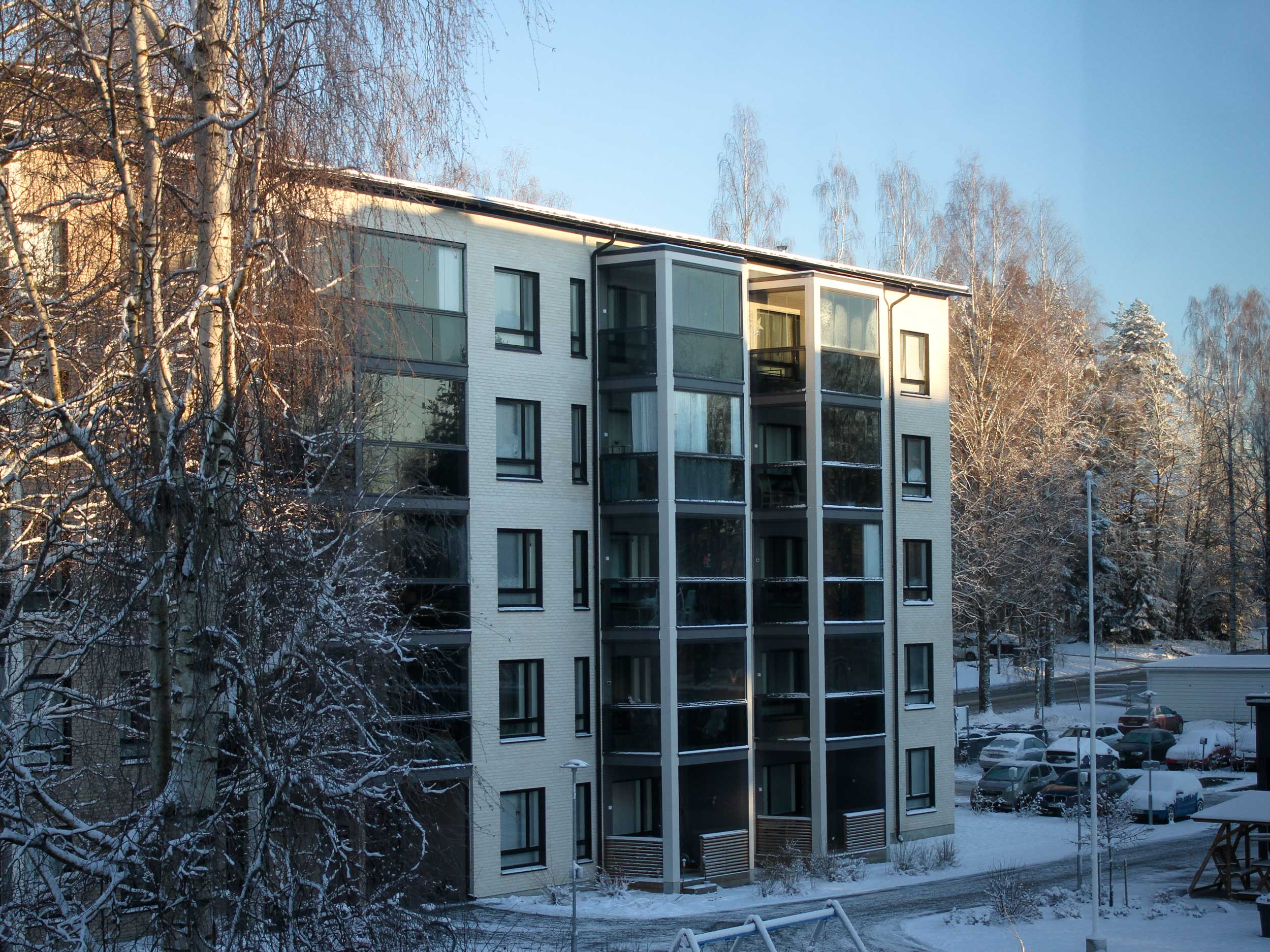
Looking for your first apartment in Finland, but don’t know where to start? Read our guide for newcomers. We cover all the basics so you can find the best apartment for you.
You’ve finally received your residence card—congrats! Now it’s time to start searching for your first apartment in Finland. If you’re not sure where to begin, don’t worry, we’ve got you covered.
Finding a new place to live is always stressful. Add in a foreign rental market and language barrier and the search becomes downright impossible. We know first-hand what’s it like, having moved many times in the UK and most recently to Finland. So we’ve put this guide together to shed some light on the apartment hunting process created especially for those moving without the support of a Finnish spouse or friend.
This guide will cover a little bit of everything, like Finnish apartment basics, rental types, popular rental sites and common terms and abbreviations. I’ll share some good to know tips based on my own experience of living here as a recent expat. And you’ll get insights and useful vocabulary from a native Finn.
Whether you’re moving to Finland for work, study, or for a fresh start, this guide will help make your apartment search simple and straightforward. So let’s dive in and get you one step closer to feeling at home in Finland!
Please note: you must have a personal ID number (henkilötunnus) in order to arrange viewings and/ or rent an apartment in Finland. This should be issued with your residence permit. Learn more about it here.

1. Finnish Apartment Basics
Before we start hunting, let’s cover the basics first. While renting an apartment in Finland is no different than anywhere else, there are some quirks that you should be aware of. We’ll go over what to expect and what you should take into consideration when looking for your first Finnish apartment.
Costs
Make room in your monthly budget for the following. These are not typically included in the rent.
- Water – Hot water is often used for heating, instead of electric or gas. If your apartment is heated with hot water, expect to pay either a fixed monthly fee per person or just pay for what you use. It really depends on the landlord or rental conditions. If paying a fixed fee, you will have to pay the difference if you go over, which can be costly. If your flat has a water meter, you pay for what you use.
- Electricity – You will need to get your own contract but you can shop around and get your own contract with a supplier of your choice, with a fixed or variable fee. Plus there’s an electric transfer bill (sähkönsiirtomaksu) which is paid separately. Electricity is really cheap in Finland so no need to stress about big bills!
Our electricity bill is about 10-15€ a month and the transfer bill is around 15€ a month.
- Home Insurance – Typically, a requirement when renting to cover any damage to the apartment or your items. It also includes coverage for legal fees and travel baggage so it’s worth the money. You can shop around and choose for yourself.
We pay around 14€ a month
- Sauna – If you don’t already have a sauna in your bathroom, you can use your building’s shared sauna for a fee.
- Parking – Paid monthly and the price depends on the type of parking offered, which can range from outdoor, covered and parking garages. Covered outdoor spots or places in garages are more expensive than outdoor spots.
We pay 19€ a month for an outdoor, uncovered parking spot.
Heating and Cooling
Finnish apartments stay warm despite freezing temps in winter, thanks to great insulation and double or triple glazed windows. Radiators heat most apartments, which are controlled by the building’s central system.
This means that you can control the temp within your apartment, but only when the heating is turned on in the building. Don’t worry about buying a space heater, you won’t need it.
While the insulation makes for a toasty cozy winter, the summers are a different story. From June – August it can get quite hot inside, especially if you live on the top floor or if the building is positioned directly in the sun, facing south or southwest.
Some apartments have air conditioning, but it’s not common. Invest in a fan and black-out curtains for summer or look for an apartment building in the shade with some tree cover. We live on the top floor and it can easily reach +25C inside.
Layout
All apartments, at minimum, will include a bathroom, kitchen and sleeping or living space, either in separate rooms or all combined. When looking for an apartment, it’s important to note that the living room is included in the total number of rooms.
For example, if you see a listing for 2h (2 rooms), this is for 1 bedroom and 1 living room. If you need a 2 bedroom apartment, look for the term 3h.
It’s also common for apartments to have a balcony or terrace space if on the ground floor.
Apartments should have built-in storage and wardrobes, as well as basement storage. Consider this before bringing or buying a wardrobe or dresser as you may not need it. We have 5 floor to ceiling cupboards in our bedroom that store all of our clothes, shoes, bedding and towels, as well as extra boxes and containers.
Size
Apartments are measured in square metres. Studios, 1 and 2 bedrooms are common.
New and refurbished apartments have covered balconies which can help add some extra space. Perfect for relaxing or for storing more bulky, awkward items like bicycles or sports equipment.
Newer apartments tend to be more compact, with a combined living, dining, and kitchen space. If you want something more spacious, look for apartments built in the 80s or 90s that are 45 – 60+ sqm.
For example, our 1 bedroom apt is 59sqm and we have a separate kitchen and living room.
Pets
Listings should advise whether pets are allowed, not allowed or negotiable.
Housing through municipalities or agencies like VTS or Sato are more lenient when it comes to pets. With private landlords it’s at their discretion.
Overall, Finland is generally quite pet-friendly. However, dogs should always be kept on leashes unless in an enclosed dog park and cats are kept indoors or on leads if outside.
Location
If you have a car, make sure your apartment building has parking. If you don’t, research surrounding transport links or if essential shops are in walking distance.
As someone who has lived with and without a car, I find that it’s a good rule of thumb to live within 15-20 mins of a grocery store, either by walking, public transportation or car.
If you live alone, consider living near a pharmacy in case of illness or emergency – you can only buy pain killers from here, not from the grocery store as is common in other countries.

2. Your Rental Options
Did you know? There are actually a few different options for renting an apartment in Finland. Learn more about what you’re eligible for and find out what will work best for you.
Subsidized – Housing built with state funds offered on the basis of urgency, need and income (more about income requirements here).
- Available to Finnish citizens or people comparable to Finnish citizens (people with a registered residence, residence permit valid for 1+ years, or student residence permit).
- Apply by filling out an application, choose where you want to live and state your requirements.
Con – you don’t get to pick the apartment and you may have to wait awhile if there are a lot of applicants. Also if you decline their offer you may get pushed to the back of the list (considered non-urgent).
Pro – cheaper than private renting, may not require security deposit, and you can leave with 1 month notice in some cases.
Unsubsidized – Standard rental not based on urgency and there is no income limit. Non-fixed term lease, no security deposit. Available to Finns or anyone with personal identity number valid permit for 12mos.
Private – standard private renting. At landlord’s discretion. Subject to credit check (if you have debt or bad credit it is kept on luottotietorekisteri registry so keep this in mind).
- Income level, personal ID, and valid residence permit required. Reach out to the landlord directly and arrange a viewing or use an agency, but may incur a finder’s fee.
Right-to-occupy – Part ownership/ part rental. You pay 15% of original value plus monthly fee (like rent). You can live in it for as long as you want. If you move, you’ll be refunded the 15% fee at current building value. This option is more of an investment, so it may not be that relevant for newcomers.
Owner Occupied – you own the property. You must get a permit from the Ministry of Defense if you are not an EU/ EEA citizen. Check individual requirements.
Us – We live in a subsidized apartment that we were offered through VTS Kodit. We had a short window of time to secure an apartment in Finland before leaving the UK, so we went with a subsidized apartment because we met the income requirement and needed something asap – like within a month of moving. We also didn’t want to deal with a private landlord this time around as we had bad experiences in Britain.
With VTS, we didn’t need to pay a security deposit and we didn’t need to have any references or guarantors.

3. Where To Find Apartments In Finland
Now that you have an idea of what you’re looking for, let’s start apartment hunting. Here are some of the most popular rental sites in Finland. You can filter your requirements by location, price, rooms, and type of rental.
Subsidized Housing:
Heka – Helsinki-based
VTS Kodit – Tampere – based
TVA – Tampere – based
SATO – rental broker offering unsubsidized and subsidized properties
Private & Owner-Occupied:
Right-to-Occupy:
Asuntosäätiö – mix of right-to-occupy, private rental and ownership options
HASO – Helsinki
Student Housing:
TOAS – Tampere
POAS – Also for workers under the age of 30 in Tampere
HOAS – Helsinki
Also, check your local city municipality website for links or info about housing specific to your area. Check here for Tampere and here for Helsinki.
If something looks too good to be true, it probably is. If you see a place with cheap or reduced rent – read the fine print. This is likely only reduced for x amount of months and then the rent will increase. Or the lease is only for x amount of months and then you have to leave. Or major renovations will be taking place.

4. Common Abbreviations and Terms
During your search, you’ll see a lot of abbreviations like “2H+KT+S”. Apartments in Finland are often described in this secret code and, unless you already know Finnish, you probably have no idea what these mean.
Here are the most common abbreviations and Finnish terms you’ll see when apartment hunting. These are especially useful to know when looking at layouts or blueprints.
Yksiö = studio
Kaksio = 2 rooms or 1 bedroom in US/UK terms
Kolmio = 3 rooms or 2 bedrooms in US/UK terms
H = huonetta = room.
FYI= 2h does not mean 2 bedrooms, it means 1 living room and 1 bedroom. If you are looking for a 2 bedroom apartment, look for 3h.
Oh = olohuone = living room
Mh = makuuhuone = bedroom
K = keittiö = kitchen
Kk = keittiökomero – kitchenette
Tk = tupakeittiö – the kitchen is in the same space as the living room without separation
P = parveke = balcony
T = terassi = outdoor terrace
Kph = kylpyhuone = bathroom (bathrooms usually only have shower, no tub)
S = sauna – some apartments have a small sauna room inside the bathroom.
Do not use this as a drying room – really dangerous, can cause a fire. Use only for sauna and nothing else.
Vh = vaatehuone = direct translation is walk-in closet, but it’s more like a large wardrobe.
Et = eteinen = hallway/foyer
At = autotalli = garage
Khh = kodinhoitohuone = laundry room
Var = varasto = outdoor storage. Often a little hut near the entrance that’s attached to the building. Most often seen with rivitalos
m2 = neliömetri = square meter
kk = kuukausi = month
Here are some useful Finnish terms that you’ll see when reading through descriptions or to use when searching:
Asuntoilmoitus – Apartment Advertisement
Asukas = resident
Näyttö = apartment showing
Vuokra-asunto = Rental apartment
Omistusasunto = owner-occupied house
Asunto-oikeusasunto = right-to-occupy (Part ownership/ part rental)
Opiskelija-asunto = student apartment
Vesimaksu = water bill
Takuuvuokra = deposit
Hoitovastike = to do with asumisoikeus or omistusasunto. Basically the bills and maintenance fees you pay on top of mortgage
Yhtiövastike = hoitovastike + other fees. Sometimes some places have utilities paid in the yhtiövastike instead of paying separately for example
Kerros = floor
Ensimmäinen kerros = first floor = ground floor
Toinen kerros = second floor
Alakerta = downstairs
Yläkerta = upstairs
Rappu – stair – means the stairwell/ building you live in. If you live in building C, it’s rappu C.
Rappukäytävä = staircase
Hissi = elevator/ lift
Parkkipaikka = parking space
Kellarikomero = basement storage
Vinttikomero = attic storage
Pyörävarasto = bike storage
Pesutupa = building laundry room
Common building types
Here are some common building types that you’ll see while searching for an apartment.
Omakotitalo = own home/ detached house
Paritalo = semi-detached
Kerrostalo = block of flats/ apartment building
Pienkerrostalo = small block of flats
Rivitalo = row house/ terraced house
Luhtitalo = an apartment building where the front doors are outside as opposed to inside the building
Buildings that only have three floors or less usually don’t have elevators, so keep this in mind if you have heavy furniture.

Good To Knows
Understanding how things work in Finland is best learned by actually living here. Unfortunately, that automatically puts newcomers at a disadvantage. So here are a few things I’ve learned since I’ve moved here – from one newbie to another!
Balconies – If you see a listing for an apartment building without covered balconies, it means that the building has not been renovated recently. Check the bottom of the listing to see how old the building is. If it’s 30-40yrs old then renovation is imminent.
Keep this in mind before settling on a place, to avoid dealing with major disruptions.
Guest Parking – Buildings usually have designated spots for guests. This is free, but there is a time limit. Make sure you remember to set your parkkikiekko.
Internet – Some places include internet with the rent, but you will need to buy your own router. Double check the plugs and input are compatible first before buying a router as this will differ from place to place. Internet speeds are quick and we’ve saved the equivalent of £28 a month since we’ve moved.
Cable – There is no separate TV license like in the UK, so you can buy an antenna cable and have live TV in your apartment at no extra cost or set-up. You can also pay for a channel package through Elisa, Telia and etc.
Bathroom – Bathtub/ shower combos aren’t common, especially in newer buildings. Typically, bathrooms feature an enclosed shower or a simple drain in the floor.
If you live in an apartment with the just a drain, make sure you buy a pikakuivain or lattialasta (long handle squeegee) to clean/ wipe the excess water. This was new to me and was a little weird at first, but it’s much more functional than a bath or enclosed shower and it’s way easier to clean.
Laundry – Check if your building offers free laundry facilities. While it can be inconvenient to share, it will help save on your water bill and energy costs.
Our building has 2 washing machines, a dryer and a drying room. Overall it’s been really easy to use. Plus running up and down the stairs to the basement has been a good workout!
Basement – There is usually extra storage space in the basement marked for each individual apartment at no extra-cost. Just make sure to buy your own lock.
We use ours to store winter tires, luggage, and boxes from our last move. There’s also a separate room in our basement for bicycles. Check to see what your building offers, as it will save you a ton of space.
Conclusion
And these are the basics of finding your first apartment in Finland. By now you should be more familiar with apartment basics, know your rental options, recognize and understand the terms and abbreviations used in advertisements. While apartment hunting is just one step in the relocation process, getting it right can make a huge difference in how smoothly your new life begins.
Of course, the search is only part of the challenge—viewings, paperwork, and dealing with landlords and agents can be trickier, especially without Finnish language skills or support from family or friends. We’ve been through the moving process twice now, and we know how overwhelming it can be. But we also know that all the stress and worry are worth it once you find the perfect place.
If have any questions or suggestions, leave a comment below.
Or if you want to know what comes after the move, read my guide “For a Smooth Start in Finland”. I’ll share my timeline and tips for getting all the must-do’s done asap. If you want an in-depth look at a Finnish apartment and want to know more about facilities, keep an eye out for our upcoming guides.
Good luck with your apartment hunt!


Leave a Reply