

Thinking about moving to Finland with your own car? Turns out, there are a lot of things to consider before you embark on your journey.
In this blog post, I will talk about all sorts of things you need to consider like taxation, navigating customs and car inspection/MOT. There will also be some practical tips about driving long distances across multiple countries.
As an example, I’m going to be using our big move across Europe in 2024 from the UK (outside of EU) to Finland. Although the rules are slightly different when moving to Finland with a car from the EU, some steps you will have to do no matter where you come from. The details might be very specific to our circumstances so it’s important to remember, this is something for you to reference, not to use as a blueprint!
If you need more help, or you have some very specific questions relating to your own circumstances, I recommend contacting the relevant authorities in Finland. They will give you the most accurate and up-to-date information.
Here are the things I will be covering in this article:
- Customs & Import rules
- Taxation & Insurance
- Registration & Car Inspection
- Driving to Finland across Europe
Customs & Import Rules
Originally when we were looking into moving to Finland, our plan was to buy a large van before the move, fill it with our furniture and personal stuff and drive to our new homeland. After some initial research though there were a few obstacles with this plan.
Turns out, when importing a car to Finland from outside of the EU that was bought less than 6 months ago, you are liable to pay ALV (VAT, sales tax) upon arrival to Finland on top of the car tax (more on that later) which is a 25.5% (since September 2024) tax bill from the car’s purchase value. To avoid this, and other customs charges, you need to own the vehicle for at least 6 months before moving and declare it as a muuttotavara (removal goods or household goods). This will save you loads of money but, it also means that you are not allowed to sell the car for another 12 months after moving or you are liable for the charges you just saved on.
If you are moving from another EU country, you are not liable to pay customs duties of VAT unless the car is new. There is also no restrictions to sell the car within 12 months of moving in.
The same declaration applies to all the goods that you move with. For example, if you buy a television less than 6 months before you move, technically you need to pay ALV on the TV. Cars being a much bigger purchase (by value and size), it’s harder to let that sort of thing fly under the radar.
Filling From 45s
To import your car as muuttotavara, you will need to fill the Form 45s. Filling it out is straight forward and shouldn’t take you too long to complete. You will need to fill in all sorts of dates regarding when you moved in and out of Finland and where you are planning on staying – so make sure you remember and keep notes. Importantly, the form asks if your goods contain a vehicle and the date you acquired it. As an attachment to this form, you will need to include a list of all moving goods (including your car) and the estimate of their value.
Unless customs & tax officials have a reason to think you’re lying to them or if you are importing an expensive car, it’s very likely that everything will get rubber stamped and you won’t have to worry much about customs officials harassing you for more details or proof. However, it’s important to provide an accurate staying address and contact information on the form as they may pay you a visit to check. Again, if you’re a regular person with a regular car I doubt they care but with these sorts of things, you never know.
Here’s more info about the subject whether you are moving from another EU country or from outside of the EU: https://tulli.fi/rajoitukset/autot/muutto

Taxation & Insurance
Here are the steps you need to take to tax and insure your vehicle in preparation to registering it. Just note, you will need “strong identification” to do the following steps. Otherwise you may need to see the tax man and the customs people in person.
If you don’t have “strong identification” enabled in Finland, try your best to get that enabled before your move. Read more about it here.
Step 1: Submit a declaration of use to the Finnish Tax Administration about your intent of using the car.
If the car is registered in a EU or ETA country, all you need to do is submit the declaration on the Vero site. If the car is registered elsewhere, you also need to apply for a siirtolupa (transfer permit). The siirtolupa allows you to move the car from the point of entry to Finland to a garage or inspection centre and involves a small administrative charge.
Step 2: Make a car tax declaration and pay the car tax.
Within 5 days of the declared start date of use, submit the car tax declaration and pay the car tax.
In Finland, when a car is registered (or imported) for the first time, you will need to pay a tax on top of the yearly car tax. This is a percentage of the purchase price which also depends on the year the car was made and its powertrain.
For my 2009 model car, which I bought for £2500 the tax was about 450€. Then on top of that the yearly tax is 220€ as well so quickly you will be out of pocket for hundreds of euros before driving an inch on Finnish soil.
Step 3: Insure the car
There are many car insurance companies to choose from and you can shop around quite easily. It does make financial sense to do all your different insurances (car, home, life, pet, sickness) through the same company so bear that in mind when choosing your provider. You can also transfer your no-claim driving history from another country to Finland as long as you can prove it. This will give you an additional bonus percentage off the total quote for the year, so make sure to get proof of your driving history in your origin country to save precious pennies!
I was worried that my car insurance quote would be expensive because of my car’s UK right hand drive configuration. However, I don’t think the Finnish insurance company (Lähi-Tapiola) cared at all and I was able to get a very affordable quote.
Please note that before you can get the car registered & inspected, you will need to have valid insurance on the car.
Registration Inspection (rekisteröintikatsastus)
Once you are physically in the country, you’ve paid your taxes, declared your car to customs and have valid Finnish car insurance, you can finally register the car in Finland.
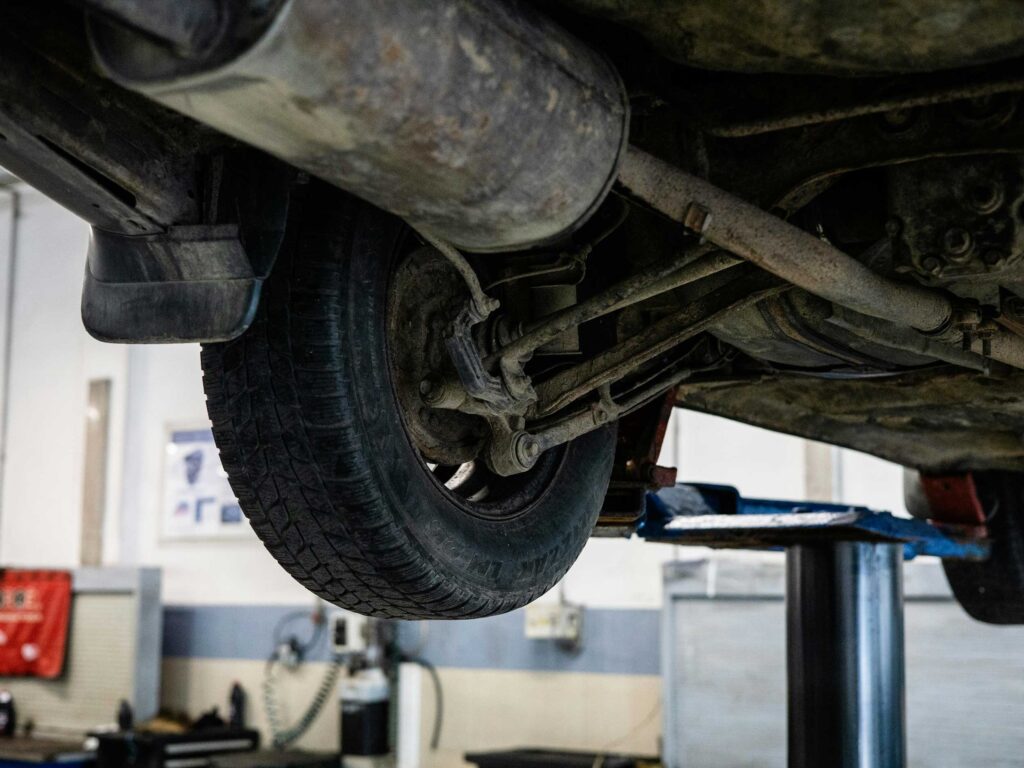
Register the car by going to an official MOT/inspection center and book a registration inspection. Even though in Finland you can have your car inspected practically anywhere these days, when initially registering your car you can only do it in certain official places. Look for “A-Katsastus” offices in your town, they deal with registering your car, providing Finnish licence plates and other official car and driving related things. The cost of the inspection will be around 120€ as long as it passes on the first try.
You can use this link to find and book a “rekisteröintikatsastus” (registration inspection). Please note, not all of A-Katsastus locations offer this type of inspection.
For the car to be registered in Finland, it needs to meet the legal requirements. This means you may have to make some changes to the car such as changing the front lights (like in my case). You will also need to provide some documentation from prior registration. These include the registration certificate from the original country of registration as well as other proof that the car is suitable for Finnish roads such as a COC (Certification of Conformity).
This might be the case if the car is an obscure model or manufactured outside of Europe. In fact, because there are stringent safety and emissions requirements for cars in Europe, you may not be able to import and register any car and register it for use for European roads.
Because my car was made in Europe and already registered in a European country (England), I didn’t have to meet the safety or emissions standards. If your car is from outside Europe, it may not be worth it to try to import it. Unless you’re dearly attached, of course.
My situation
Because I bought my car in the UK, it was made for lefthand traffic. This meant I had to change the head lights so they would be suitable for righthand traffic. I opted to have these changed by a “professional”, but depending on the car you may be able to do this yourself.
My car ended up failing the registration inspection anyway because of some rust damage and a worn front trail arm so I had to fix these issues and come back later for another inspection (within a month). However, once I had proof that I had tried to get the car inspected, I was allowed to drive with my old British lisence plates.
Driving to Finland
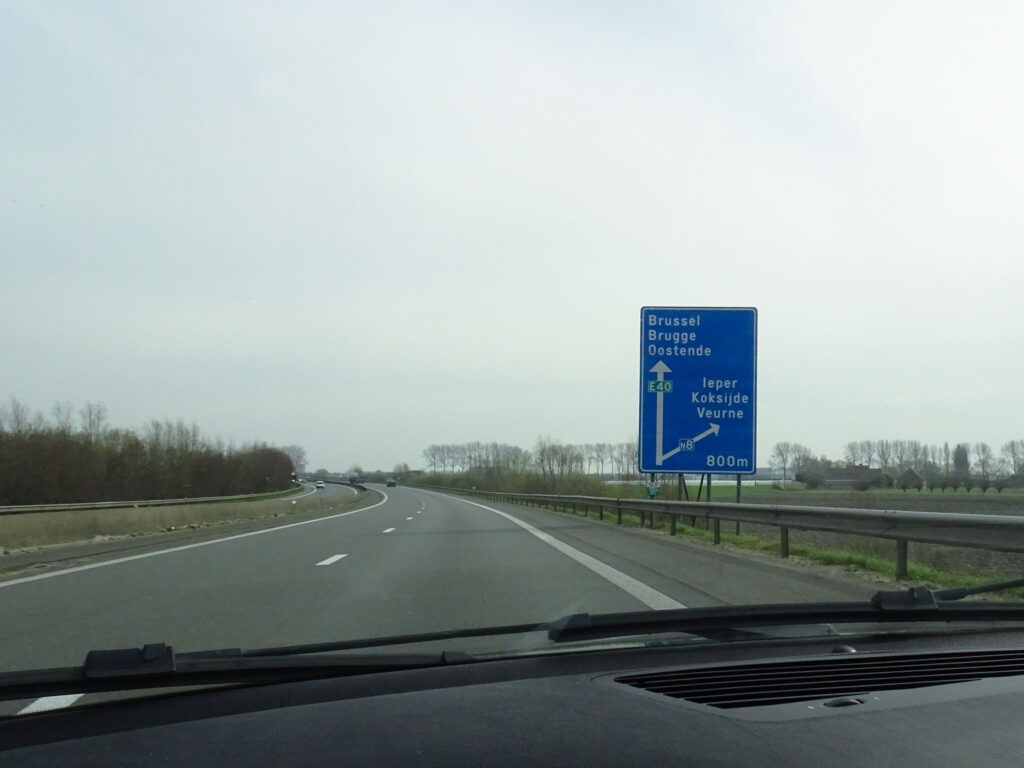
If you’re planning to drive to Finland and will be crossing through multiple European countries, there are a few things you must know before you set off. I have driven quite a few long distance trips over the years in addition to this one so I believe I have some valuable tips for you.
1. Ensure your car is suitable for driving in all the countries you drive through.
Different countries have different requirements! Make sure your car meets the legal requirements in each country you drive through at that time of year! There are some requirements that you may not even be aware of.
For example, in Sweden your car needs to have winter tires between November 10th and April 10th (starting November 2025) regardless of driving conditions. Whereas in Finland, you only need to have winter tires if the weather requires it. When we drove through Sweden there was no snow or ice on the roads, but we needed to have winter tires regardless. If we had been stopped by the police, we could have been in trouble.
There are some other obvious and not-so-obvious things you must have in your car before driving in Europe. If you enter Europe through France for example, you must have a breathalizer, a fluorescent safety vest and a warning triangle in your car for safety-purposes.
Before I left the UK, I bought a ”Driving in Europe Pack” from Halfords UK which included all these things as well as a UK sticker (a sticker denoting the country of registration), a first aid kit, and headlight beam changing stickers (to avoid blinding upcoming vehicles).
2. Familiarise yourself with driving rules in different countries to avoid dangerous situations.
In some countries, like Finland, if a junction does not have stop or give away/yield signs, you have to give way to cars approaching from the right. While this is more of a common occurrence in city centres or suburbs, it’s still good to know so you can easily avoid any accidents or confusion on the road.
And if you are planning on driving through Germany and on the Autobahn, it’s better to know the rules about lanes and speed limits before getting involved in a high speed crash. France also has different speed limits if it’s raining. So check what countries you are driving through and find out if they have different rules than what you’re used to!
3. Make sure you have valid insurance!
You need to have valid 3rd party insurance when you drive through Europe. Basically in case you get into an accident, the insurance company will pay any damages to third parties i.e. people you crash into.
You should keep a paper copy in your car, just in case you get pulled over. In my case, my British insurance already covered 3rd parties in Europe so I didn’t have to pay any extra.
4. Don’t Drive for Too Long!
Driving from the UK to Finland took 3 days in total, and I tried to stick to 7 hours of driving a day, with one 9 hour day. During the journey, I’d give myself a 2 hour long break to stretch my legs and do some sightseeing. Keep in mind though, when traveling long distances, there’s always a chance of running into traffic jams, accidents, roadworks or something random.
Always take into consideration that there may be accidents, roadworks or other unforeseen delays that might make you miss a connecting ferry or train.
When creating an itinerary/timetable for yourself, think of how long it will take you to get where you need to go. Give yourself a 20% buffer, just in case something unexpected happens. For example, if you are planning on driving for 4 hours, allow an extra 25 minutes in your calculations. If you are planning on driving for 8 hours, better allow an extra hour to get to your destination. It’s better to arrive early and have to wait a little longer for the ferry, than to speed your way towards the harbor because you got stuck in traffic for 35 minutes.
5. Have snacks!
You must have snacks when road tripping.This is not optional. Think of this as a once-in-a-lifetime opportunity to try out as many different snacks and drinks as possible in close succession. When else can you stop at a rest stop in the Netherlands for a meatball sandwich and then the following day get fresh pretzels in Germany.
Is It All Worth It?
Is it really worth moving to Finland with your own car from abroad? Frankly: probably not but it all really depends on your personal situation and how much you love your car.
In our case, we found that driving was weirdly less stressful than trying to figure out how to get to the airport with all of our stuff. And it was much easier tying up all our loose ends with a car than without. I don’t know how we would have made the ten trips to the recycling centres without our car. But the real deciding factor for us was our pet, who we wouldn’t leave behind and wouldn’t trust a pet courier to get to the destination happily.
Also, as I’ve come to realise since I’ve moved back to Finland, used cars are expensive. Most of the affordable models are over 10 years old and have about 250,000 kms on them. If you’re thinking about selling your car and buying a new one in Finland, think carefully. All the taxes you’ll pay by importing and the money you’ll spend on petrol, may work out cheaper than buying a new car.
In the end, we felt that bringing our own car gave us one less thing to stress about, which is worth infinitely more than saving some extra money when planning our multi-country journey to Finland.
To give you an idea of how much it might realistically cost to drive from the UK to Finland (~1600 miles), here’s a rough estimate:
Petrol: ~600€
Ferry SWE-FIN: 120€ (extra because of a pet cabin)
Channel tunnel: 120€
Danish bridge tolls: 100€
Snacks & drinks: (dare not say)
Hotels: ~140€ (2 nights)
And here’s how much the other stuff cost:
Car tax: 450€ + 220€
MOT: ~120€ + 30€
Other expenses: ~200€
Total: +2000€
Conclusion
There are many things to do when moving to Finland, especially if you are bringing your car with you. The process isn’t as simple as driving across the border and simply arriving. It includes many bureaucratic steps and many expenses. Hopefully this article gives you a better idea of what needs doing and whether it’s worth it in the first place.
In summary, if you are moving to Finland with a car you will need to do these steps in order to register it and use it:
Declare the car in customs
Follow the instructions here. Declare the car and declare
Pay the taxes & get insurance
Declare your intent to use the car, and pay the car tax before entering Finland. Buy insurance for the car.
Take the car to a registration inspection
Take the car into a registration inspection at Ajovarma. If your car is deemed suitable for Finnish roads and is in good condition, the car will be registered with Finnish licence plates and you can drive freely in Finland.
If you’d like to read more articles about moving to Finland, check this article for 7 steps for a smooth start in Finland or browse all our Life in Finland articles.
You May Also Like:
 7 Steps for a Smooth Start After Moving to Finland
 Apartment Hunting In Finland – Guide for New Arrivals
 Finnish Integration Course: My Experience Learning Finnish Online
 Driving in Finland: Must Know Rules & Considerations
 Baking in Finland: Ingredients, Supplies, and More!
 11+ Things to Do in Tampere This Summer
Leave a Reply