You have just booked a winter holiday in Finland and you are planning to explore the country by car? Or did you just recently move to the country and are confused or worried about not being aware of the driving rules?
Driving in a new country always comes with little quirks and traffic rules that may not be obvious to all. Driving in Finland is no exception.
Read this article if you are planning on driving in Finland or want to learn some crucial traffic rules in Finland for any other reason. We’ll be covering default speed limits in Finland, what sort of special driving rules there are as well as the big white elephant in the room: driving in snow and ice…
This is not a comprehensive guide on traffic rules and the meaning of different signs and symbols but a crucial guide on the most important “unwritten” (or un-signposted) rules you must know before hitting the road.
Speed Limits in Finland
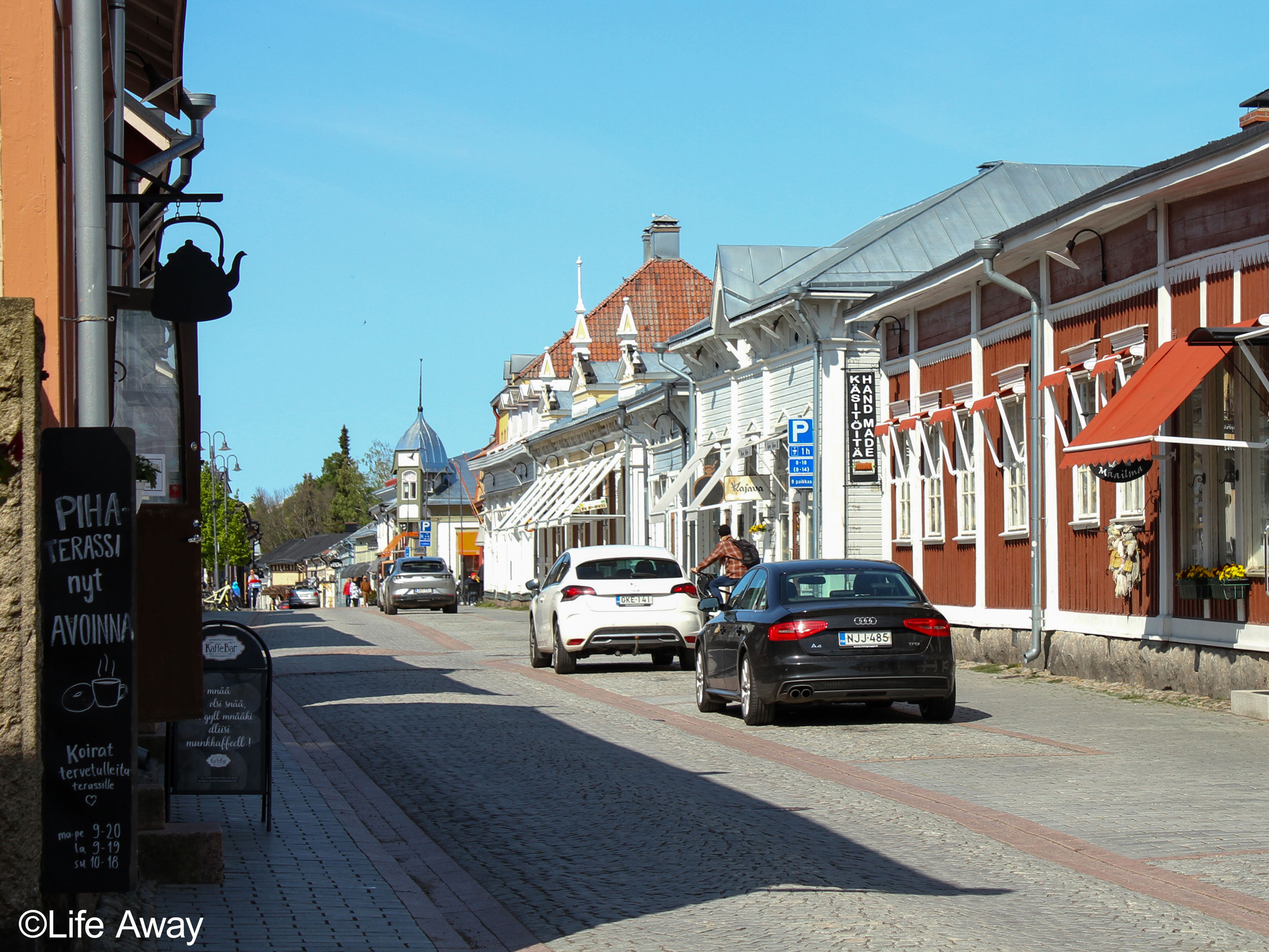
Just like everywhere else, speed limits are usually clearly posted on signs by the side of the road. In Finland, these range from 20kph on pedestrianised streets to 120kph on motorways (12.5mph to 75mph). What you need to know though is what the speed limit is when not explicitly displayed. Luckily, this is pretty simple compared to some other countries (looking at you France):
National/default speed limit = 80kph
Speed limit in built-up areas = 50kph
Pedestrianised streets & “pihatie” = 20kph
If you are outside built up areas, the speed limit is 80kph if not otherwise stated. This is the case even if the road is a winding narrow gravel road through the woods. But the speed needs to be adapted depending on driving conditions – don’t consider this a target.
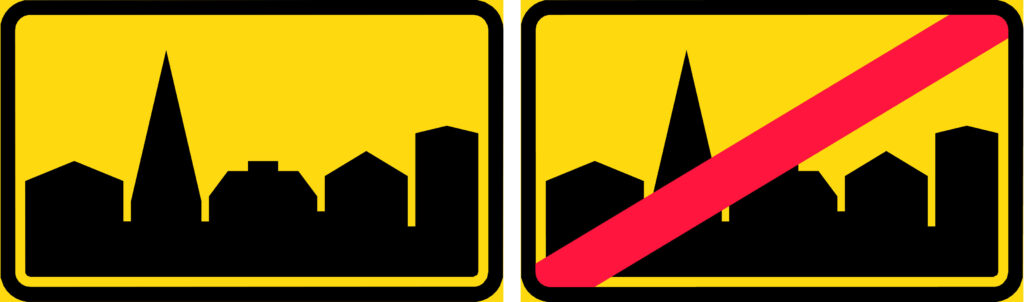
Once you enter towns and suburbs; the so called “built-up areas” (taajama) the speed limit is 50kph. But how do you know when you’re in a built up area? Luckily, there will always be a “taajama” sign to indicate when you’re entering and leaving a built-up area. So pay close attention to these signs while driving!
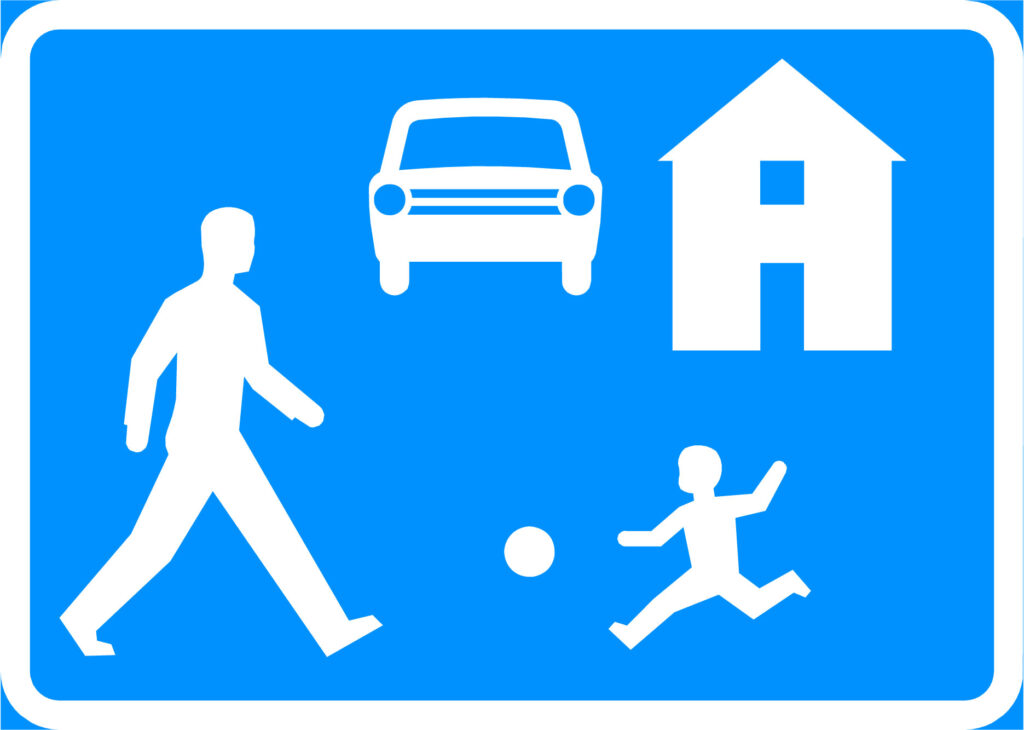
On pedestrianised streets and “pihatie” (residential driveways / access roads) the speed limit is 20kph. Just like with taajamas these are clearly signposted (see images below). You also have to remember that pedestrians always have the right of way on these sorts of streets even if there are no crosswalks or clear pedestrian walkways.
On some roads and the motorways the speed limits are lowered in the winter. Nothing to remember here though as the signs will physically (or electronically) be changed. As long as you keep your eyes open you won’t risk speeding on familiar roads.
Important Driving Rules in Finland
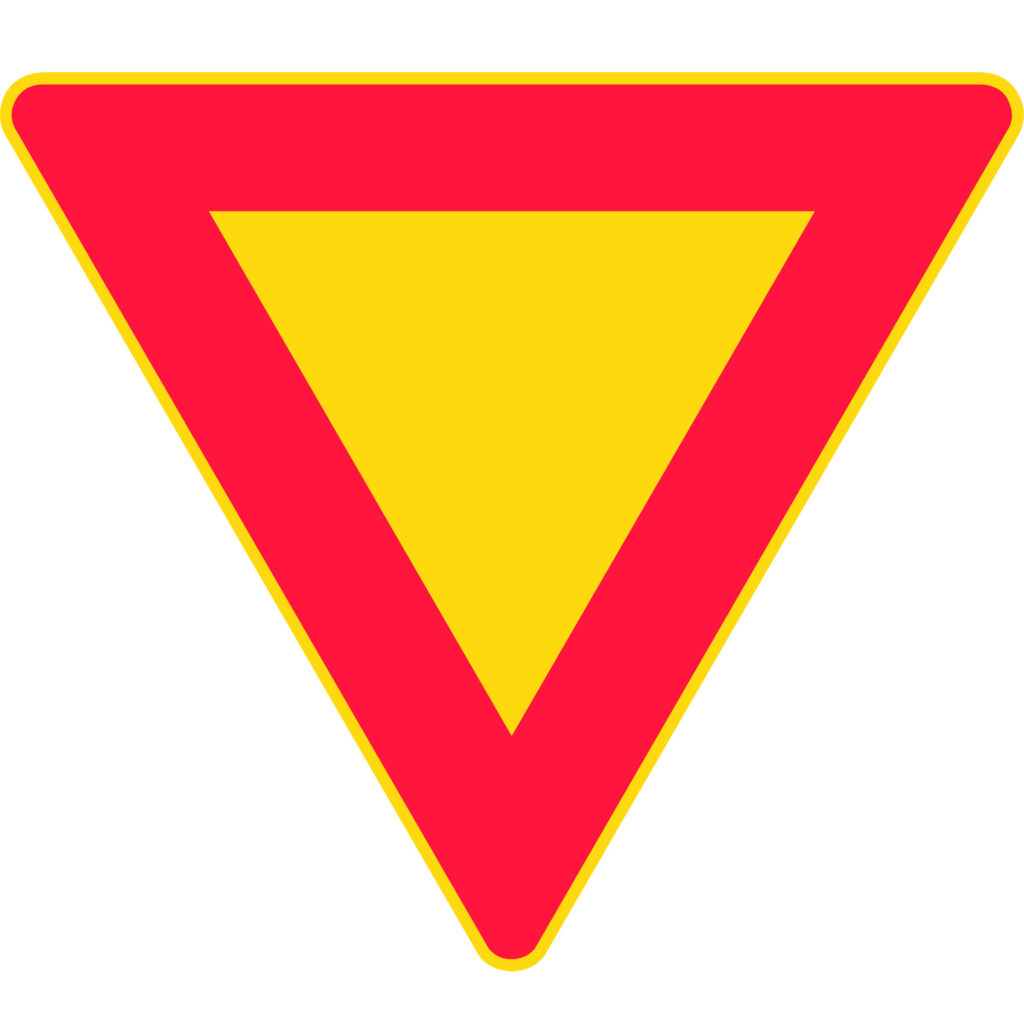
One major rule is how so-called “equal junctions” are approached. If you or the people coming from your left or right don’t have a yield or stop sign, whoever is coming from the right goes first. This is a tough rule to learn and remember. This is a tough rule to learn and remember – even Finns struggle with this. Watch out in parking lots for people coming from the right and zooming past thinking they have the right of way for some reason.
These equal junctions usually only exist in urban environments where the speed limit is below 40kph. Before every junction, you’ll need to keep your eyes peeled for a yield/give way or stop signs. You can’t assume you can keep going straight but have to check that there’s a sign to your right. Sometimes, there may be a warning sign for an equal junction (see below), but these are only required if the speed limit is 50kph or above. You will rarely see them.


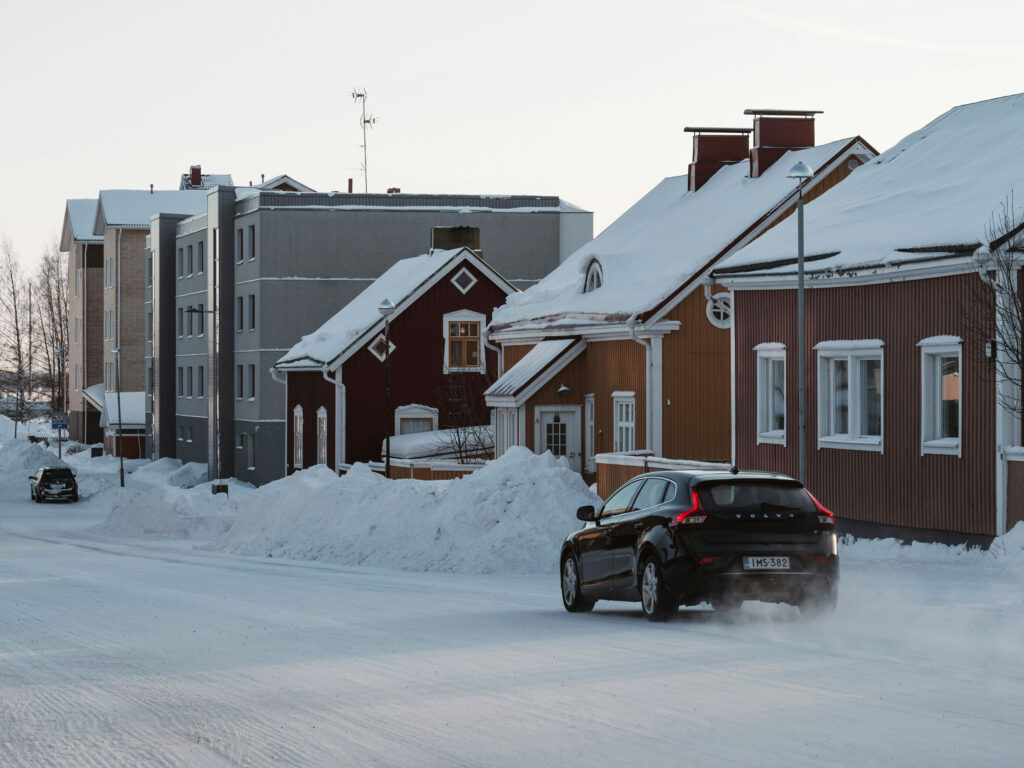
Also, when driving in Finland, you must have your driving lights on at all times – at least your “day lights”. If it’s dark out or visibility is low, you will need to turn on your regular low-beams as well so that your rear lights are on. Don’t trust your fellow drivers to know when to have the lights on. Many Finns have a bad habit of letting the car’s automatic light systems do the thinking and end up driving through snowstorms with their lights off…
Winter Driving Conditions in Finland
And talking about snowstorms…. You may have heard that Finland gets cold and snowy in the winter. You have heard right, although some winters, especially in the south, the weather is mild and there’s no snow in sight making you question if the tourism board was lying to you the whole time.
But still, most of Finland gets snow reliably every winter causing difficult driving conditions in towns and highways. Cars must be prepared to drive through the treacherously slippery conditions and snowstorms, most notably by fitting winter tires.
In years past, the law stated that winter tires needed to be used from November to April no matter what the weather conditions. The law has changed in 2020 to only apply if the weather requires it.
You do have options though: either studded tires or studless winter tires. If you are just passing through on holiday from somewhere in Europe with less snow, a studless tire will be a great choice as you can drive it comfortably all the way from your country of origin without the drawbacks of studded tires.
If you are planning on driving deep in Lapland or elsewhere in the Finnish countryside, studded tires are a preferred choice. Once leaving the big cities, the roads are considerably icier and maintenance is not as common. Studded tires provide extra grip on pure ice which is great for those who are not familiar with driving in wintery conditions. They are also very loud on bare tarmac and they break the roads, so those who drive mainly in cities should consider non-studded winter tires (kitkarenkaat).
If you rent a car, you won’t have to worry about what sort of tires you’ll have. That would be the rental firm’s job. You do have to keep in mind that the car has way less grip when braking and cornering on snow and ice. Remember to drive with care and anticipate dangerous situations. And don’t let anyone pressure you to drive faster than you are comfortable driving!
Conclusion
Driving in Finland comes with its fair share of rules and quirks. Hopefully you now know the most crucial things you must know so you can avoid driving tickets or potentially serious accidents.
This article is only scratching the surface. If you are staying longer than a weekend trip to see the northern lights, I recommend you head to your local library and get yourself a book explaining how to drive in Finland in greater detail and check Liikenneturva-website for information about driving safety and more tips about driving in Finland.
Are you planning on moving to Finland from another country with your own car? Read the article about the things you need to remember before you do so. It’s quite the list of requirements let me tell you.
If you are curious about living in Finland or about its culture in general, head to our Life in Finland page for all our Finland related articles and guides!
You May Also Like:
 Moving to Finland With Your Car: Steps, Considerations and More
 7 Steps for a Smooth Start After Moving to Finland
 Apartment Hunting In Finland – Guide for New Arrivals
 11+ Things to Do in Tampere This Summer
 Finnish Integration Course: My Experience Learning Finnish Online
 Baking in Finland: Ingredients, Supplies, and More!
Leave a Reply